
Why Our Research Website Agency Is Built on High-Impact Biomedical and Bioinformatics Publications
Our research website agency is built on high-impact biomedical and bioinformatics projects such as COVID19db, ExpOmics, ExomiRHub, and MicrobeTCM, supporting research from publication to long-term visibility.
11/3/20253 min read

In academic research, credibility is demonstrated through concrete work — not claims.
For research website design, the same principle applies.
Our research website agency is built on published, high-impact biomedical and bioinformatics research projects, not hypothetical examples.
The systems we design today are directly informed by platforms and studies that have already passed peer review and are actively used by the research community.
Research Websites Are Extensions of Real Research Projects
In biomedical and bioinformatics research, projects are not abstract ideas.
They involve:
Complex datasets
Iterative analysis
Clear methodological logic
Eventual publication and reuse
A research website must be able to represent this reality accurately.
Our approach to website design comes from building and publishing real research platforms, where structure, clarity, and long-term accessibility are mandatory — not optional.
Concrete Examples From Published Research Projects
Our experience is grounded in specific, publicly available biomedical and bioinformatics projects.
ExpOmics: Multi-Omics Data Exploration Platform
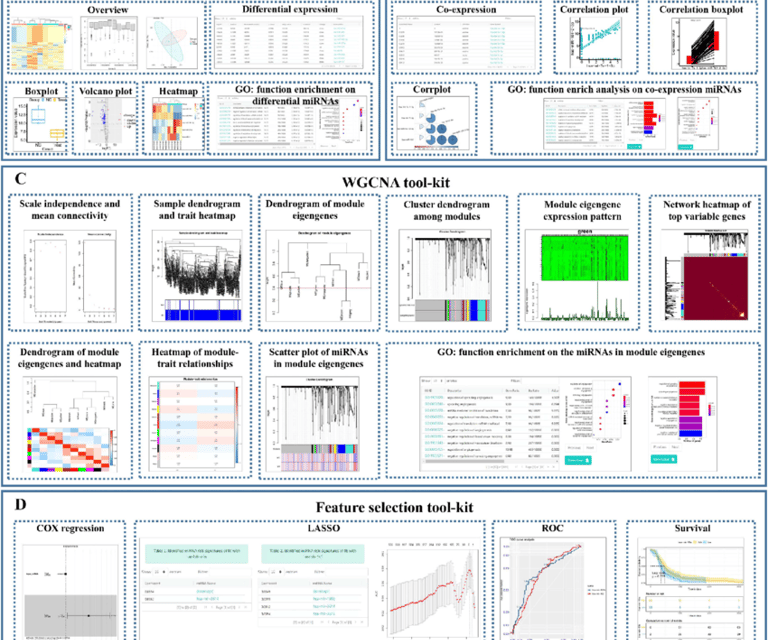
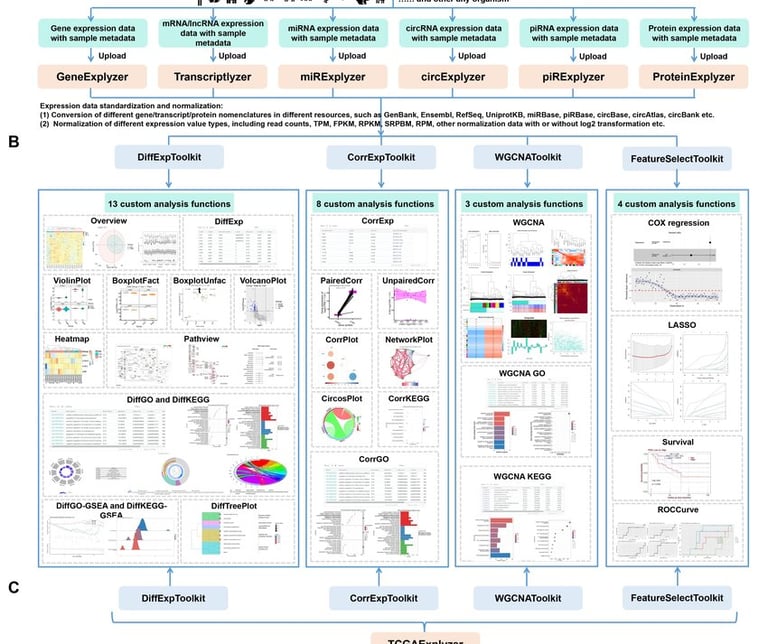
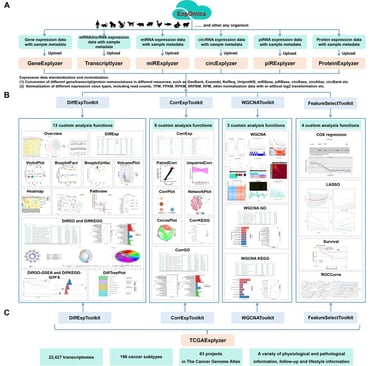
ExpOmics is a comprehensive web platform designed for the exploration of multi-omics data, including gene expression, mRNA, lncRNA, miRNA, and protein-level information.
Designing ExpOmics required:
Structuring heterogeneous biological data
Enabling intuitive navigation across omics layers
Supporting long-term dataset expansion
This project directly informs how we design research websites that must scale with data growth and evolving research questions.
ExomiRHub: Extracellular microRNA and Disease Research
ExomiRHub integrates extracellular microRNA transcriptomic data associated with human diseases, supporting research into non-invasive biomarkers.
From this project, we learned how critical it is for research websites to:
Preserve scientific context
Clearly link datasets to biological interpretation
Support precision expected in biomedical publication
These requirements translate directly into how we structure project and publication sections on academic websites.
MicrobeTCM: Microbiome and Therapeutic Interaction Database
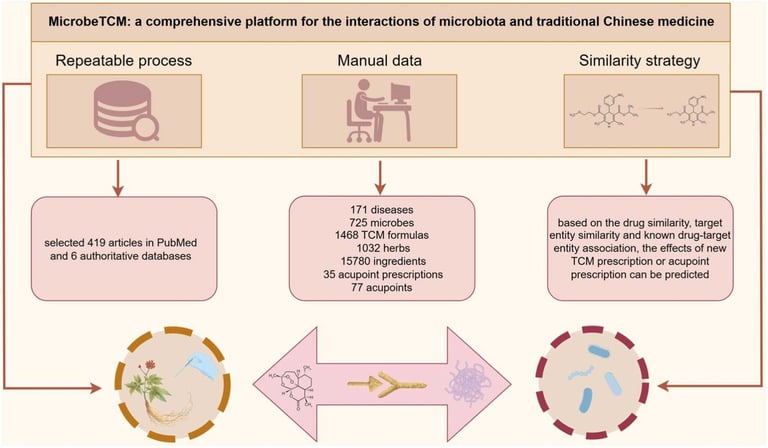
MicrobeTCM focuses on interactions between microbiota and traditional therapeutic compounds, bridging microbiome research and biomedical intervention studies.
This project highlights the need for:
Interdisciplinary data representation
Clear explanation of biological mechanisms
Robust navigation across research dimensions
Generic website templates are incapable of supporting this level of scientific complexity.
What These Projects Teach Us About Research Website Design
Because these projects resulted in peer-reviewed, high-impact publications, they imposed strict constraints that shaped our design philosophy.
From them, we learned:
How reviewers and readers navigate research content
How projects should connect to published outputs
How clarity affects credibility and reuse
As a result, we design research websites that:
Reflect real research workflows
Connect projects, people, and publications coherently
Remain accurate and usable long after publication
Why Generic Platforms Fail in High-Impact Research Contexts
Generic website builders prioritize speed and visual consistency.
They are not designed for research platforms like ExpOmics, ExomiRHub, or MicrobeTCM etc.
High-impact biomedical and bioinformatics research demands:
Flexible data structures
Publication-ready presentation
Long-term maintainability
When research content is forced into rigid templates, scientific meaning is lost — regardless of how polished the site looks.
Research Websites as Academic Infrastructure
For universities and research groups, a website is part of their academic infrastructure.
Funding agencies, collaborators, and reviewers expect to see:
Clearly defined projects
Transparent links to publications
Evidence of sustained research activity
Our experience building and publishing biomedical and bioinformatics platforms allows us to design websites that meet these expectations authentically.
Conclusion
High-impact biomedical and bioinformatics research cannot be represented by generic website solutions.
Agencies grounded in real, published research projects — such as ExpOmics, ExomiRHub, and MicrobeTCM — bring an understanding that goes far beyond design trends.
They understand how research is structured, evaluated, published, and reused.
For institutions seeking research websites that accurately reflect serious scientific work, publication-informed, project-driven design is essential.In biomedical and bioinformatics research, publication is not the end of the research process — it is a milestone within a longer academic lifecycle.
How research is presented before, during, and after publication directly affects its visibility, credibility, and long-term impact.
Yet many research websites are still built using generic web design platforms or agencies with little exposure to real, published research. This disconnect often leads to websites that look polished but fail to accurately represent the structure and intent of scientific work.
If your research group or institution is planning to redesign its website, working with a team that understands academic requirements can prevent long-term structural problems. You can reach us via our contact page (https://researchbuilder.online/contact) to discuss your research website needs.
Stay in touch about research websites
© 2025 ResearchBuilder. All rights reserved.


Building research websites and data platforms for universities, labs, and research groups.